Why do cab medallions go up?

image:Mister-E via flickr (cc)
image credit:Mister-E via flickr (cc)

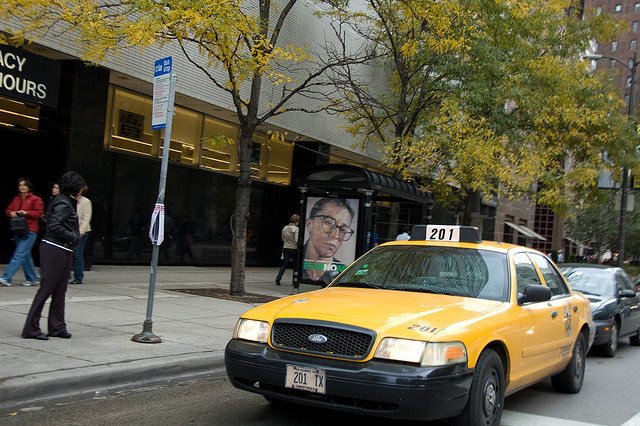
Last time we looked, Chicago taxi medallions were going for slightly over $250,000, far higher than a few years earlier.  In the subsequent 17 months, they’ve continued their rise, and here are the most recent transactions reported on the City’s web site:

4/27/12    6601    $325,000
4/27/12    5594    $345,000
4/30/12    6182    $348,000
5/3/12      1839     $360,000
5/4/12      2297     $370,000

Now, I do not follow taxi matters in great detail, as I am not of the economic class which can regularly use cabs.  But it’s hard to believe that, in less than two years, the economic value of the privilege of operating a taxi has increased by anything like 50%.

The best explanation, I think, came from a driver who styles himself Samuel Langhorne Insull.  He explained that medallions aren’t used by taxi passengers, but by taxi drivers.  And who are the taxi drivers?  For the most part, they’re people unable to get work in their chosen or more lucrative professions, who drive a cab for survival.  And are there more of those people nowadays, or fewer?

That makes sense as the main cause.  Of course, additional pressures are the general levitation of financial asset prices due to the FRB’s zero-interest-rate policy, and perhaps anticipation of future increases in value.
Planned office tower may take double subsidy

rendering of 444 W Lake St proposal
rendering from Chicago Sun-Times

Two or three developers (depending on which source you read) plan a new 45-story, 900K sq ft, $300 million office tower at 444 W Lake Street. In the world most of us were born into, this would mean they’d purchase the site, continue to pay taxes on it, and on the building when constructed. Thus the prior landowner would benefit from the transit and other infrastructure that we all provide, some part of this cost being offset by taxes resulting from the project.

This particular building, tho, may be a special case, to be built on air rights over the north approach to Union Station, tracks owned by either Metra or Amtrak. So public transportation would benefit, right?  It doesn’t appear so, because, I think pre-Amtrak, the old Chicago Union Station Co. sold off the air rights. The Sun-Times says Larry Levy owns the “site,” presumably including the air rights.

Still, the building will yield taxes which help the comunity pay, right? Not in today’s Chicago.  Blair Kamin says we’ll pay $29 million in real estate tax money to the developer, to build a park.  A commenter elsewhere suggests it might be $40 million. Whichever, of course, that’s on top of all the subsidies we pay to provide transit service and maintain infrastructure without which this building would be infeasible.

The Tribune helpfully notes that the project “is expected to generate … 3,400 permanent office jobs.”  Apparently those office jobs will be created to fill the building and would not otherwise exist in Chicago. The details of this mechanism are beyond me.

Silicon Ocean


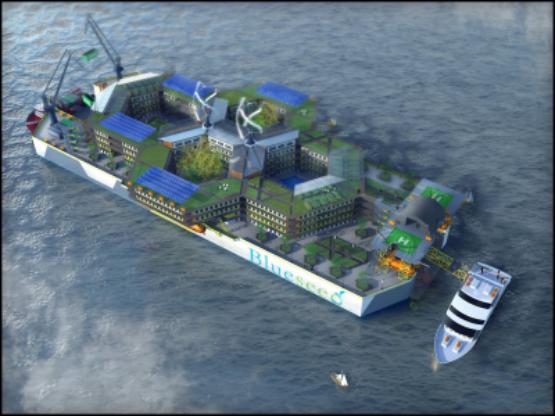
Blueseed concept proposal
Blueseed concept proposal, one of several at their site

Blueseed plans to start operation next year of a floating city, safely outside the twelve-mile limit of U S jurisdiction, where a thousand innovators can work pretty much without the immigration hassles imposed on domestic companies.  The “land” of the ocean is of course free to anyone who wants to use it, but there are big expenses in building and operating the platform.  Still, they estimate living costs comparable to those of pricey San Francisco (albeit for much smaller living space.)  If land in Silicon Valley was cheap, the ocean site would seem expensive, but it isn’t, so it doesn’t.

They’re entirely legal, or so it appears, and don’t seem to avoid Federal income tax altho California taxes might not apply.  Blueseed  “will work closely with the U.S. Customs and Borders Protection towards an agreement that follows all applicable US laws and regulations,” and it appears access will be from the California mainland so everyone not a legal U S resident will need some kind of U S visa.

But being outside U. S. territory, flying a flag of convenience, what defense has Blueseed against whoever might want to attack them? Not to worry, “pirates … don’t exist near California…” and presumably attacks by government authorities are no more likely at sea than within the country.


Almost the best use of CTA rail map for political purposes

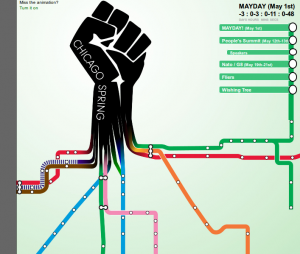
from Chicago Spring

Cute automation at the Chicago Spring site. Best thing: your visit restores the East 63rd Street ‘L’.  Second best thing: Click on a link, it takes you around the map to a destination.  Less good thing: the destination seems to have nothing to do with the subject treated.  Still, it’s a cool presentation.

Somebody somewhere can do something equally original, and even more functional, for the Henry George School.

Innovators’ Patent Agreement

Twitter says it plans for its future patents to be subject to an “Innovator’s Patent Agreement,” which will prevent them from being used “to impede the innovation of others.” Seems like a good thing, but it’s still very much a proposal, with the latest draft apparently here.  Like Google’s “don’t be evil,” I suspect there will end up being some flexibility as to what is “defensive” and what actually “impedes innovation.”

(via Barry Rithotlz)

Keeping your employees’ taxes

image credit:Jinx via Flickr (cc)

I have written before about the “economic development” tool which allows employers to keep the taxes paid by their employees.  Now I find that Good Jobs First has compiled a report showing that over 2700 companies in 16 states have got this kind of deal. The report includes a spreadsheet detailing the 3750 cases. Turns out that Illinois is far from the worst offender, gifting just $35 million of employees’ tax money, compared to $89 million in Indiana.

Thanks to David Cay Johnston via Reuters. Johnston says that these direct subsidies are considered necessary because states are already exempting such corporations from most real estate, income, and other taxes.  Altho he doesn’t mention it, states are also typically paying for worker training and infrastructure improvements.


The difference between money and wealth/services


image credit: taken in 1990 by John Foss via Wikimedia (cc)

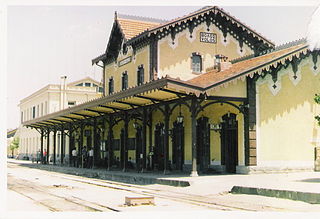
This article from the Guardian illustrates nicely the difference between what we want– goods (“wealth” in terms of political economy) and services– vs. money.  Money is a medium of exchange, which we can use to obtain wealth and services, but in itself it really isn’t capable of satisfying our desires. The particular example here is from the town of Volos, whose railway station is pictured.

I could imagine Greece not formally dropping the Euro, but just kind of abandoning it, using local currencies, perhaps eventually united into a new Drachma. It’s not clear from the article whether their government is attempting to tax the alternative-currency transactions.  The wiser course would be to tax economic rents instead of transactions, and that could be done in whichever currency is most practical.

Bast drafts Henry George for Green Bay

image credit: freedigitalphotos.net

Longtime HGS  supporter Joseph Bast, head of the Heartland Institute, has a new policy brief (pdf), with a podcast overview, recommending that fans of professional “sports” own the teams thru nonprofit corporations.  The only actual example of this is the Green Bay Packers, which originated as a for-profit organization but was bought out of bankruptcy by a fan-organized nonprofit.  They would never leave Green Bay since the owners cannot profit by moving them. Thus the main lever used by for-profit teams to extort new stadiums and other favors would be broken.

Pointing out that teams currently extract monopoly rents from the community, Bast mentions Henry George but rejects George’s idea that natural monopolies should be municipally-owned.  Of course, George never applied this concept to professional “sports,” which existed in his day but was nothing like what we see now. The closest I can think of is that George considered the idea of a publicly-subsidized theater to be so absurd, that he compared it to subsidy of various other industries to illustrate the absurdity of the latter.

So why don’t fans establish nonprofit teams?  My personal theory is that most fans of professional “sports” are masochists and like to be abused.  But perhaps I’m wrong.  Bast suggests routes around other barriers including opposition of major leagues, high cost of setting up a team, and existing taxpayer-subsidized facilities which are controlled by existing monopolies.

Is the community collecting the rent at 31st Street Harbor?

linked from Chicago Public Building CommissionChicago Park District’s new harbor at 31st street reportedly cost $103 million and can accommodate 1000 boats.  “Rates for the new harbor range from about $3,780 for a 35-foot slip to more than $10,000 for the longest slips of 70 feet and more, excluding taxes and a 25 percent nonresident surcharge.”

One could imagine that these figures might actually cover debt service, maintenance, and the economic rent of the lakefront location.   But there’s no such indication in the Park District’s 2011-15 Capital Improvement Plan, which lists funding and projects, but makes little effort to tie the two together so there’s no indication of how much any project costs nor how it’s paid for.  Nothing in the latest posted (2010) Comprehensive Annual Financial Report, either.

But in the process of browsing the District’s web site, I did discover that I would be violating their regulations if, without a permit, I post on this web site a photo that I took on Park District property.

The Public Building Commission has some information on their web site, including some contracts and many construction photos.  Can’t wade thru all of the former, but they appear not to include any information on how the project is funded.

Securitizing the banksters, with cameras and contracts

Image credit: J D Abolins via Flickr (cc)Just in case there was any doubt, Pam Martens in Counterpunch gives us a report on the Lower Manhattan Security Coordination Center, where feeds from sophisticated spy cameras are integrated to essentially track anyone and everyone on the streets who might interest our supervisors. What’s news here, tho I suppose I already suspected it, is that partners in this operation are not just the NYPD, but also “the same firms under investigation in 50 states for mortgage and foreclosure fraud and widely credited with causing the Nation’s economic collapse.”  Presumably they have added some of the proceeds of their crimes to the $150 million public money that’s been used for this project.
It’s difficult to believe that Chicago doesn’t have something similar.
Meanwhile, and I suppose it’s more relevant to us here, the CTA will be paying up to $58,000/month, plus commission, to Goldman Sachs and other “financial advisors.” The Authority assures us such amounts “are comparatively very small compared to the billions of dollars in much-needed funding CTA would secure” if such commissions are paid. “Funding” more likely means “loans” or “new ways of packaging existing streams of money” rather than any actual additional resources or capture of land value which transit could create.