Land value depends on the definition

Image of Drake Hotel by Teemu008 (cc via flickr)

In an urban context, absent special environmental issues or legal constraints,  land value and location value are pretty much the same thing.  So we read in Crains that the Drake Hotel is on a 63,000 square foot parcel valued at $150 million, implying this land is worth about $2381/square foot.  But no, the location probably isn’t worth that much.  Rather, the land is leased by the owner of the structure, and the lease document says that, every five years, the land value is to be estimated and the annual rental set at 10% of the land value.

Possibly 10% was a reasonable return in the past, but in today’s zero-interest-rate world no safe investment would yield that much. Rather, the owner of the land actually owns two things: (1) the land, and (2) the privilege of requiring the building owner to pay an above-market rental rate.  Were we to value the land “as vacant,” which is the correct way to estimate land value for taxation purposes, then (2) would disappear and the land would be worth, more or less, the same per square foot as other land in the very prestigious immediate neighborhood.

It would be interesting to see what the lease says specifically about how the land value is to be estimated, and to read the (certainly confidential) document describing how the $150 million value is justified.

For more discussion about methods of valuing land for assessment purposes, duck around for works by Ted Gwartney on the subject, or consult the old but still-relevant TRED volume.
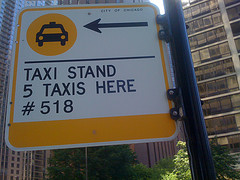

Lobbyist vs. Lobbyist: How Chicago enterprise works.

Photo credit: Adam Greenfield via flickr (cc)

Earlier this week the Tribune carried a pretty good report on Chicago’s Uber vs. cab situation. Altho many of us transit-dependent mundanes may have missed the story, it seems that people who can afford cabs can also afford smartphones (or can text using dumb phones), and many of them prefer Uber as a way to get service without having to speak with a person. You can choose a taxi at regular taxi rates (but with a minimum 20% “gratuity” that the driver splits with Uber and the credit card processor), or a classier vehicle for considerably higher cost.  I am surprised that folks pay such high rates to avoid dealing with traditional taxi companies.  A few years ago I learned that, for those who pre-book and travel more than about ten miles, limousine service is likely to be much cheaper (even for a person traveling alone) than a conventional taxi; I suspect this is still the case.

Naturally, owners of medallions (and existing dispatch services) don’t particularly like this idea, so both sides are trying to improve their service to entice more customers have hired lobbyists to “persuade” the investment banker/politician who holds the Mayoralty to throw things their way.

I guess I’m surprised too that medallion prices are holding at high levels (most recent median price $345,000, up from $260,000 about a year before, based on data compiled by Chicago Dispatcher). Whether this is really an open market, or perhaps subject to manipulation by major owners, or another symptom of financial repression, I have no knowledge.

Of course Uber’s pickup zone doesn’t encompass the entire city of Chicago, missing much of the south side, but it does extend service beyond the City boundary into some relatively affluent suburbs.


Curious land tenure arrangement at Glencoe

photo detail of a former theater building on Belmont, by Terence Faircloth via flickr (cc)

As reported yesterday by Chris Jones of the Tribune, Writers’ Theater is planning a new $30 million home on the site of the Glencoe Women’s Library Club.  Being ignorant of things theatrical, I find the interesting part of Jones’ article to be

The building would rise on the Tudor Court site of the Glencoe Woman’s Library Club, which, unusually, would continue to own the land after its building was demolished. Writers’ Theatre would be granted a 99-year lease, with a rent of $1 a year.

Construction of buildings on leased land isn’t all that uncommon, and 99 years is a typical term. But at a rent of $1/year, this obviously isn’t an investment decision.  And as (presumably) a nonprofit association, neither the Club’s members nor their heirs can expect to benefit from an increase in the selling price of land by the year 2111.  The now-unborn who will be members of the club at that time might benefit, but it’s hard to imagine current members thinking that way.

So there must be something else involved.  Perhaps the Theater will be obligated to provide some space to the club, or perhaps the land title is encumbered so that it cannot be donated. Probably if we had all the information we’d find some implications for elaborate income tax trusts of some kind that were advantageous to someone in the past. Hopefully someone will come up with more information.

Jones also notes that the location is “not far from the Metra/Union Pacific train tracks,” which implies that theatergoers could ride Metra to and from performances.  Perhaps, if they’re lucky as to where they live and when the show ends, but the Metra service is sparse and nighttime connecting bus service essentially nil in the north suburbs. Patrons who dine in any restaurant or bar before or after the show will have the opportunity, however, to pay some of the costs of providing the uncoordinated, inconvenient service.

Are subsidies driving Chicago land prices back up?

Image linked from the Crain’s article

Of course they are, but it’s convenient to see it illustrated as Crains Chicago Real Estate Daily explains.

The proposal seems to be for Pam Gleichman and Karl Norberg to sell their 4.9 acre parcel (the Tribune story says 3.67 acres) near McCormick Place, in pieces, for a total of $195 million, which works out to something over $900/square foot, a level which I don’t recall seeing so distant from the loop.  We also learn from Crains that $90 million in TIF (real estate tax) money will be sought to help pay for these developments.  And of course the entire McCormick Place complex benefits from the 1% tax which all restaurant patrons in the central portion of Chicago (as far north as Diversey and as far west as Ashland) pay, not to mention the basic urban services, such as fire protection, transit, and streets, which are funded from other taxes.  We’re all paying so Gleichman and Norberg can get their $195 million. It’s only slightly comforting to realize that their venture is in bankruptcy, and the only reason we get to see these details is because they’re part of a court filing.  But it seems that, if everything works out as they claim, they’ll get to keep a large portion of this money.

Just for fun, we can consider what would have happened under a land value tax.  If the land was taxed at something approaching its full economic rent, it would likely already be developed pretty fully because nobody could profit by holding it underused.  There would likely be no bankruptcy because nobody would have loaned money on land with a modest selling price.

Tracking the payrollers*

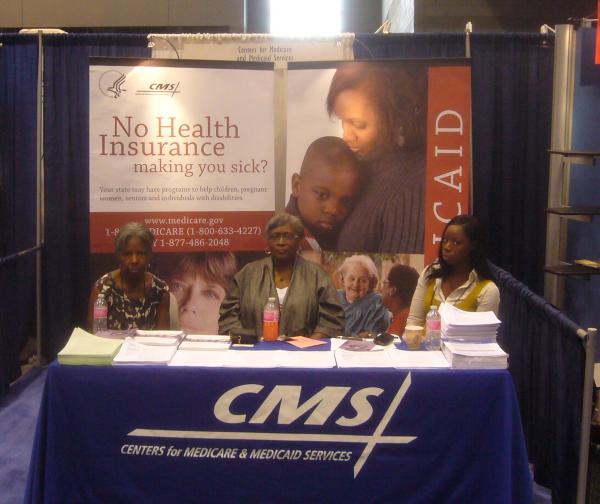
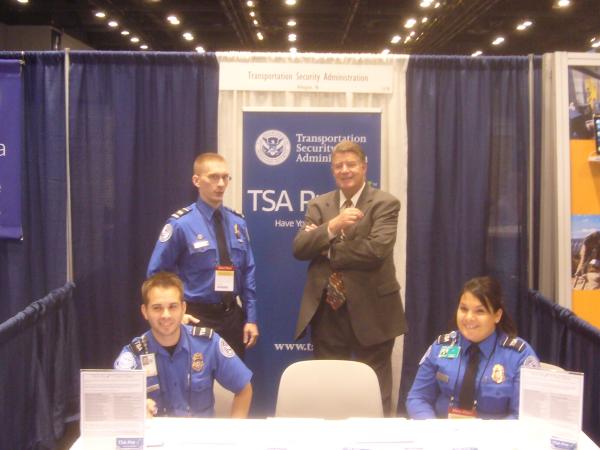
While assisting the Public Revenue Education Council at the National Council of State Legislators convention, I couldn’t help photographing some of the federal employees in “action.” Census was there, BEA was there, but I wouldn’t want to embarrass those guys because they sometimes do some useful things.  We also had

Licensed Professional and Drug Patentholder Protection Administration
Office of Travel Prevention
Department of Making Jobs and Workers Difficult to Find

Forgetting for a moment the impediment to commerce and free association, how much money are we spending on these guys?  Thanks to Gannett’s  Asbury Park Press (h/t Bob Matter), taxpayers can access a database of reasonably current salary information for most Federal employees.   For state and local employees in Illinois, Wisconsin, Indiana, and Missouri, the Better Government Association has made similar information accessible.

Government employee pensions are also an issue, and Taxpayers United of America is building a database of this information.

Now, I’m not opposed to high salaries and liberal pensions. In fact, I think everyone should get them.  The problem is not that government compensation is too high, but that private compensation is too low. Some clear graphs here (based on data collected by government employees) illustrate the problem. Nongovernmental American workers’ productivity continues to increase, but for forty years little or none of this has been reflected in wages.  The best remedy involves displacing the rentiers.

*Payroller is a Chicago term for folks whose main function is to collect a government paycheck.  It appears that in some places, the word has a different meaning.

Just because they ask, doesn’t mean we have to give it to them

Governments here in Illinois (and probably everywhere else) like to “request” things, but that doesn’t mean we mundanes always need to grant these requests.  Two examples from recent experience:

detail from work of Chris Karr via flickr (cc)
detail from a photo by Chris Karr via flickr (cc)

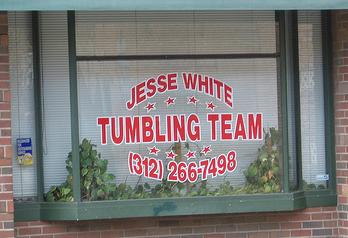
Saving money: Illinois Secretary of State Certificate of Good Standing.  Our high-tech sophisticated Secretary of State makes it easy, relatively, to get the “certificate of good standing” that organizations may require, for example, to set up some kinds of financial accounts.  No problem, just go to Jesse White’s web site, do a search (which really works, in my experience), fill out the simple form and authorize a credit card charge of $16 ($5 transaction fee, $1 payment processor fee, and $10 expedited fee).  But suppose you aren’t in a great hurry and don’t need (or want to pay for) expediting.  Or suppose you lack a credit card but have a checking account (or can buy a money order). What to do?

Nowhere could I find the answer on Jesse’s web site.  Fortunately, cheapness wonk Adam Kerman of the Transit Riders’ Authority knew what to do:

Write a letter to request the Certificate of Good Standing. Make sure to include the corporate file number and your contact phone number. $5 fee Secretary of State Business Services 501 S. Second St., Rm. 330 Springfield, IL 62756

And that’s just what I did.  A week or so later, the certificate arrived.

Current RTA Executive Director

Saving Dignity: Regional Transportation Authority old person discount fare card. A good and privacy-minded friend of mine, having recently attained the age of 65, wanted to take advantage of the “reduced fares” available to old people (among others) on RTA-funded transit systems. First thing she found out was that it takes 3-4 weeks to get the required farecard, so she should have applied 21 days prior to her birthday.  Too late for that, but she readily found the necessary form, which turns out to serve two functions: (a) apply for reduced fares based on age or other criteria; (b) apply for free fares based on likelihood of voting Democratic documented low income.  Being successful enough not to qualify for (b), she still had to complete a form with a blank for “Social Security Number.”  What do to?

She wrote “NOT REQUIRED” in the SSN blank, and 23 days later received a reduced fare card in the mail.  Moral of this story: You can surrender somewhat less privacy than the authorities ask for, without giving up rights or privileges, at least in this case.

Why isn’t this the geoists’ slogan?

source: Chicago Pedestrian Safety Campaign

It’s all about the rent.  Once you understand what it is and how it works, you’ll look for it and see it everywhere.  You’ll know the fundamental cause of unemployment, low wages, economic stagnation, and poverty.  The cause that makes possible most of the other corruption and theft that plague our nation.

The slogan came from a local campaign to reduce pedestrian deaths, certainly a worthy cause and one that got some funding and creative minds.  But we should have thought of it first.

Is this why CTA can’t coordinate?

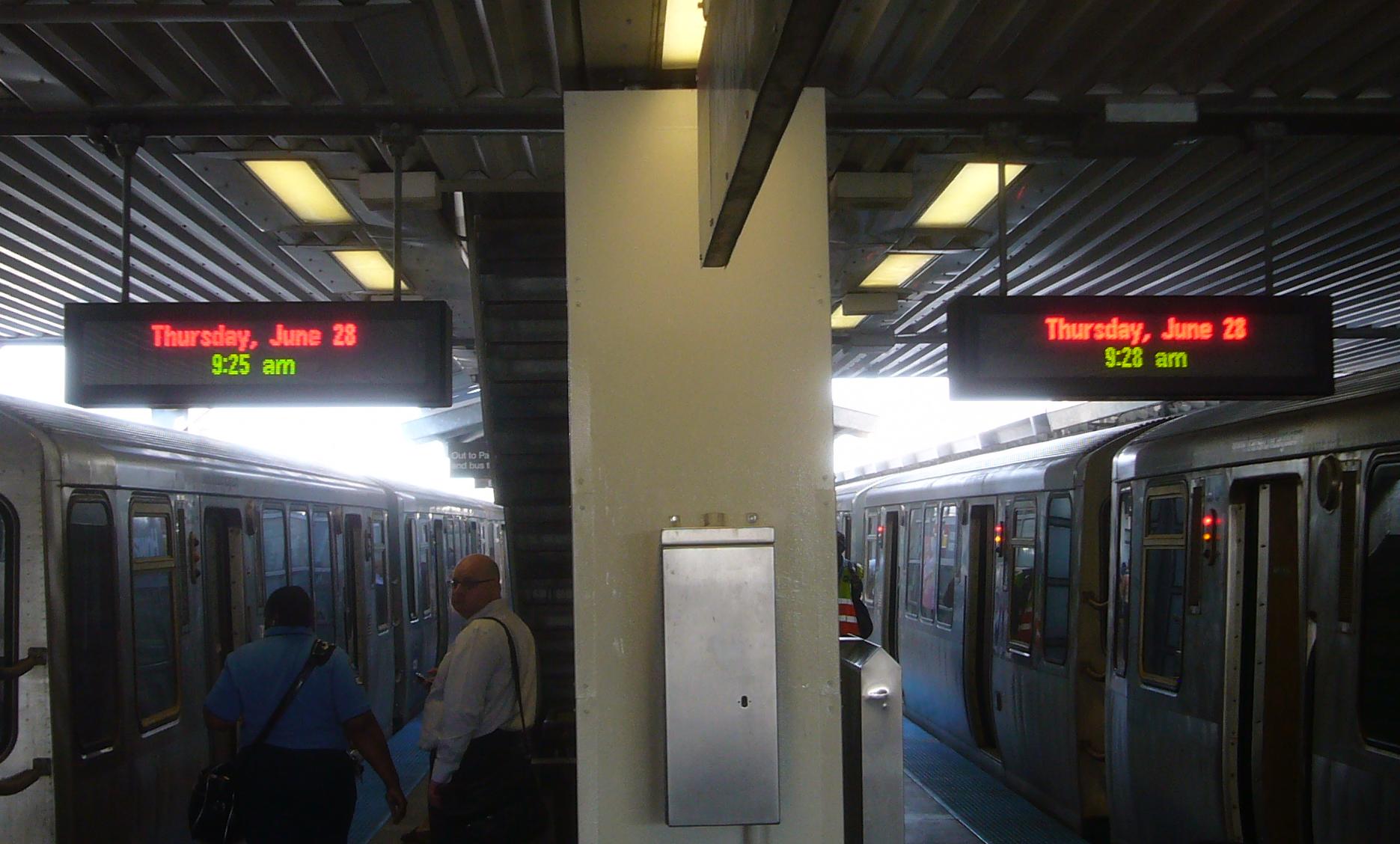
Tracks 1 and 2 at Howard Station (Transit Riders’ Authority photo)

The failure of the Chicago Transit Authority to coordinate its services is evident to regular riders. I have long attributed this to misplaced priorities, which seek to serve the interests of contractors, politicians, and certain employees, rather than passengers or the public in general.

But this picture implies that I’m wrong.  CTA do a pretty poor job of facilitating convenient transfer from Yellow and Purple Line trains to Red Line trains at Howard Street,   but this may have nothing to do with priorities or competence.  Rather, the problem seems to be that Track 1 is in a different time zone from Track 2, so if passengers actually were able to transfer between trains on these two tracks they’d enter some sort of time warp, perhaps endangering their very existence and ability to pay taxes.  Safety has always been CTA’s number one priority.  (In the photo, both tracks are occupied by Red Line trains, so no transferring takes place.  The practice of putting Red Line trains on both southbound tracks enables CTA to hold Yellow and Purple Line trains outside the station, preventing the dangerous practice of passengers transferring directly.)

Another reason passengers get delayed

click image for a bigger one
View north from Fullerton

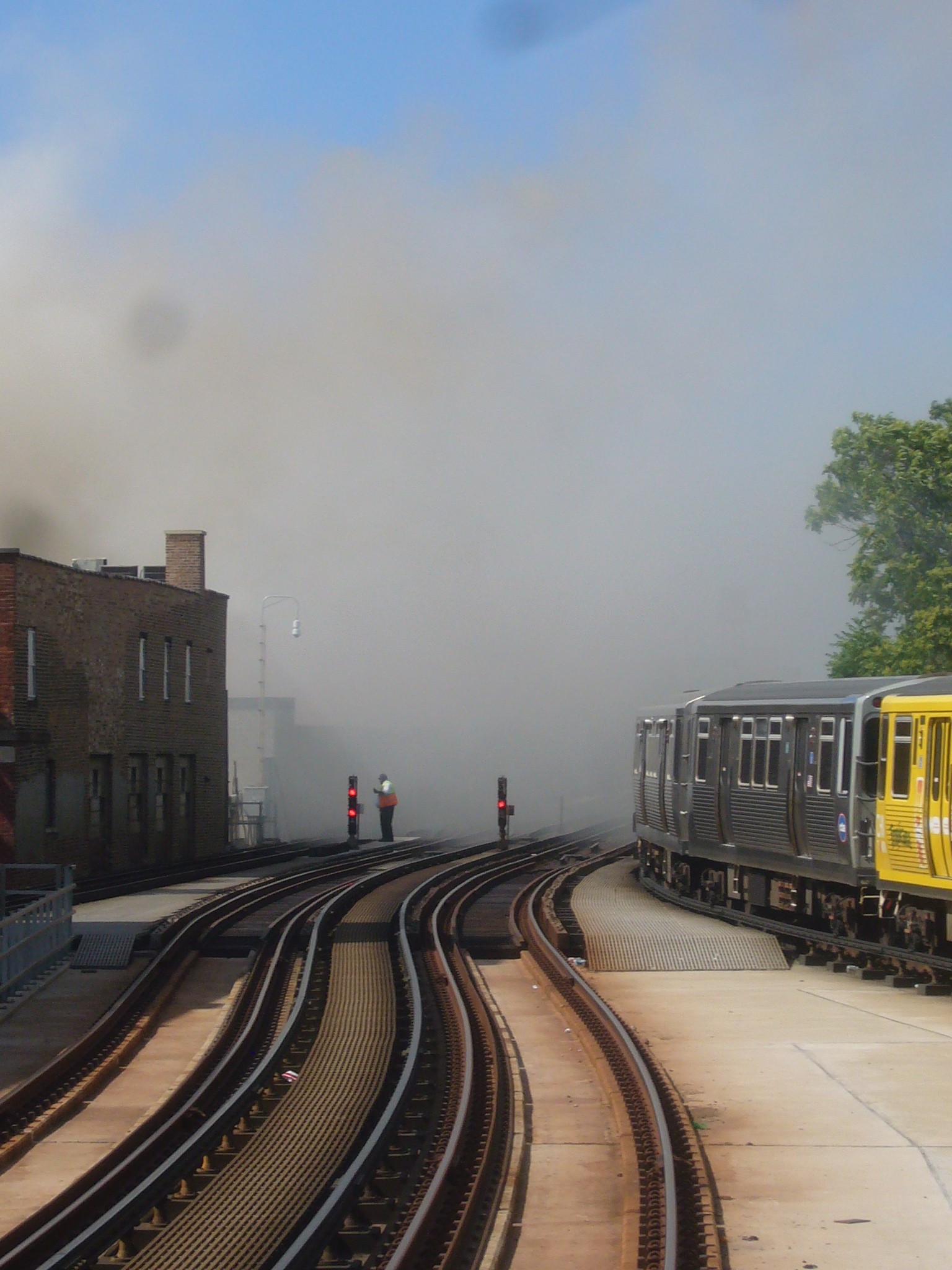
It’s not just CTA’s suboptimal management that causes passengers to be delayed.  Fire yesterday just west of the Red Line near Altgeld, trains blocked for something like three hours.  The train on Track 4 pulled back to Fullerton shortly after this photo.

After about twenty minutes it was clear service wouldn’t resume soon.  A bus shuttle was promised, but downstairs there was just one empty bus labeled “not in service.”  Even if buses were available, closure of Sheffield meant traffic was even more of a mess than usual.

So, a nice walk to Belmont, I do wonder how the CA there would have responded to a demand for free admission but as it happened I had a valid transfer and no CA was in sight anyway, just a lot of folks waiting for that mythical bus.

Can’t really blame CTA for this one, doubtless there’s plenty of blame for other agencies but I’m not privy to the details.

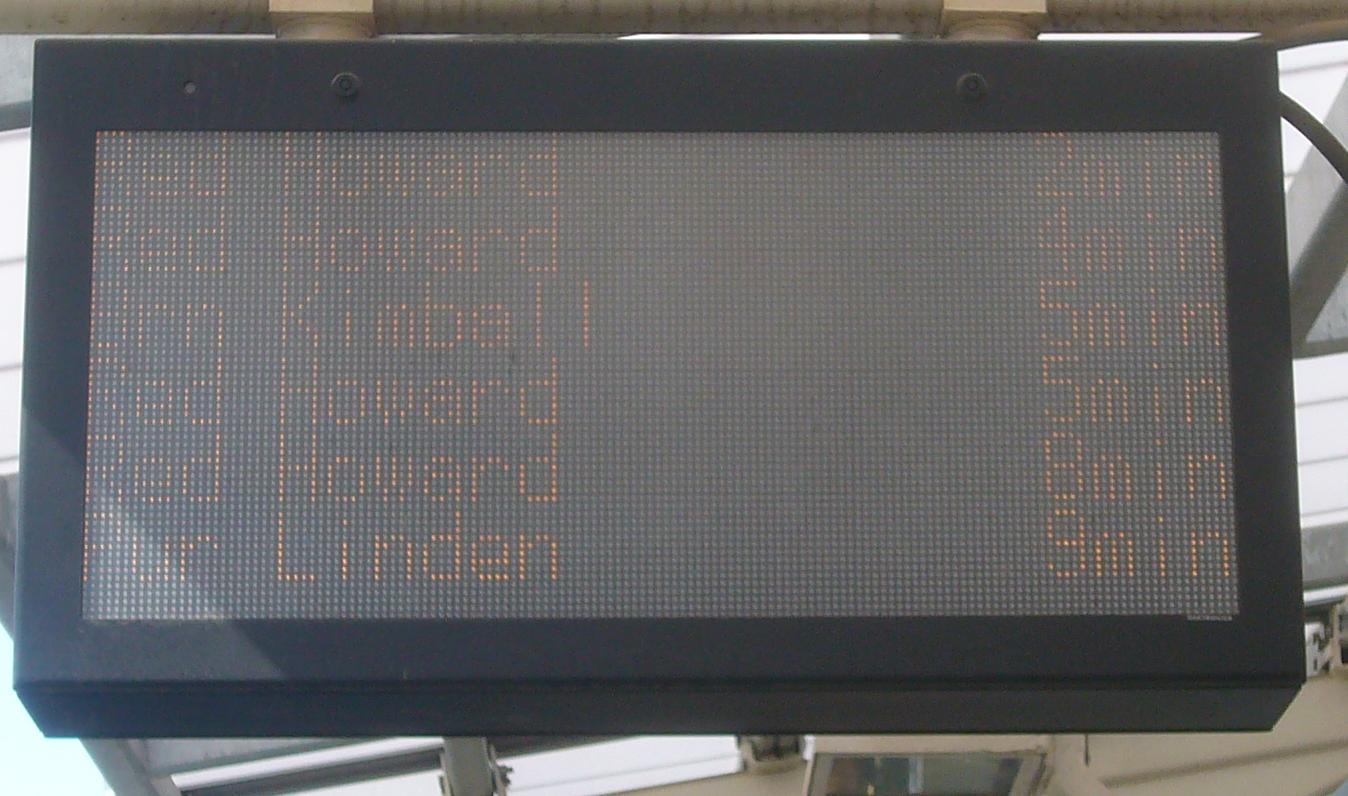
A three-hour delay didn't prevent the "information" display from promising six trains coming thru Fullerton in nine minutes.

Why do cab medallions go up?

image:Mister-E via flickr (cc)
image credit:Mister-E via flickr (cc)

Last time we looked, Chicago taxi medallions were going for slightly over $250,000, far higher than a few years earlier.  In the subsequent 17 months, they’ve continued their rise, and here are the most recent transactions reported on the City’s web site:

4/27/12    6601    $325,000
4/27/12    5594    $345,000
4/30/12    6182    $348,000
5/3/12      1839     $360,000
5/4/12      2297     $370,000

Now, I do not follow taxi matters in great detail, as I am not of the economic class which can regularly use cabs.  But it’s hard to believe that, in less than two years, the economic value of the privilege of operating a taxi has increased by anything like 50%.

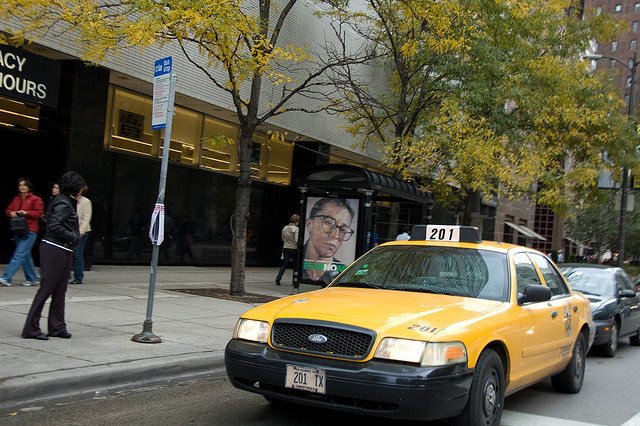
The best explanation, I think, came from a driver who styles himself Samuel Langhorne Insull.  He explained that medallions aren’t used by taxi passengers, but by taxi drivers.  And who are the taxi drivers?  For the most part, they’re people unable to get work in their chosen or more lucrative professions, who drive a cab for survival.  And are there more of those people nowadays, or fewer?

That makes sense as the main cause.  Of course, additional pressures are the general levitation of financial asset prices due to the FRB’s zero-interest-rate policy, and perhaps anticipation of future increases in value.