
New ideas on taxation, and why most of us usually don’t know about them

Photo of Dilbert model by Jon Stefansson via Flickr (cc)

Six weeks without a post, OMG! Not because I had nothing to say, but perhaps too much to organize into something readable. Or maybe I’ve just found it too difficult to locate suitable images to go with the posts.  Well, forget that, it’s time to get back to blogging.

And it was nearly six weeks ago that Miles Kimball blogged about some great ideas expressed by Dilbert creator Scott Adams for improving taxation of the “rich.” Adams’ piece was published in WSJ, I can’t figure out which date, I don’t know how long the public link will last and I can’t actually figure out the title of the article.  Adams’ point, if I understand it correctly, is those who pay the greatest amount of taxes would more willing to do so, if given suitable nonmonetary incentives.  He suggests maybe the top 100 taxpayers should be invited to a celebratory dinner at the White House, where they’ll be praised for their contributions to America.  (I wonder whether richest-men Warren Buffett and Bill Gates would qualify for this event.  More likely a bunch of wealthy heirs and heiresses who got poor tax advice).  Another idea is that top taxpayers should get certificates allowing them to violate certain regulations, such as parking in handicapped spaces or using carpool lanes alone. (Of course, the very wealthy wouldn’t worry much about the fines such actions would impose if unauthorized). Or, suggests Adams, maybe the top taxpayers should each get two votes (which would make no difference in election results compared to the influence the wealthy can already buy).

More important, I think, is Adams’ point that, if you can’t think of a good idea, it’s best to think of some bad ideas and offer them for criticism. It’s a technique I have used with fair success (my role being to offer the bad idea).

But the main lesson we can draw from Adams essay is that,if your idea regards public policy, then no matter how good (or bad but creative) it is, nobody powerful will pay attention to it until it’s expressed by somebody who is already influential. Thank you, Scott Adams.
 

How China and Wal-Mart Help the Poor to Pay more Rent

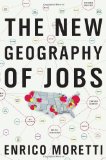
Good interview last week on EconTalk, with Enrico Moretti who has a new book, The New Geography of Jobs. Some places are growing and innovating, some stagnating and declining.  Which one would you rather live in? Enrico seems to prefer the innovative one, where workers are more educated (at least in the credential sense), jobs are available, and even if you’re working in a local service job — barber, dentist, whatever — your wage will be higher.  Host Russ Roberts keeps Moretti pretty much honest, sure wages will be higher but so will — they don’t dare use the phrase — economic rent. And so if you’re a homeowner, you benefit (assuming of course that you bought before the innovative, growing local economy was widely recognized), while if you’re a renter, perhaps not.

From the interview, it appears that the book includes some analysis of how working people benefit from low-cost imports and big-box stores. I don’t doubt it, if the working person can afford to support an auto-centric way of life then these developments do benefit her/his standard of living.

Moretti suggests that places will be better off if their workforce has more formal education.  Roberts is at his best here, pointing out that, sure, college professors would say that.  Moretti does seem to recognize that, as more people get credentialed (“skilled”), this will tend to reduce the earnings gap between the unskilled and the specialised. He does not say that it does so by reducing earnings of the skilled, but we can figure that out.

The most irritating part, for anyone who understands political economy, is the assertion that wages for service workers are higher in innovative, growing regions because service workers are more productive there.  I don’t know if they’re more productive, maybe a dentist fixing the teeth of $100,000 engineers is more productive than one who does the same for $25,000 laborers, I have no idea.  But regardless, wages aren’t determined by productivity.  They’re determined by the alternatives: If the employer can get competent labor for less, she almost certainly will do so, over time if not right away. And if the worker can find a job that, all things considered, is more satisfactory, why wouldn’t he take it?

Economic divide is geographic, too

“Debt” graffito photo by Franco Folini via flickr (cc)

When I see the same theme coming from two different sources, I think there’s a trend (tho maybe it just means I wasn’t paying attention). And so we heard Meredith Whitney a few days back describing the developing divide of local and state governments, between those that are solvent (and can attract mobile, affluent residents and investors) and those spiralling down the debt hole. Now Al Lewis looks at it from the retail side– nobody wants to invest where the mundanes live, but as areas like Silicon Valley and Washington continue to prosper retail facilities are renewed and enlarged.

In a democracy of educated, thinking citizens, any state finding itself on the wrong side of this divide could reverse its decline simply by removing all taxes on wages, capital, purchases, and transactions in general, substituting a very heavy tax on land value (which ideally would include the value of mortgages on land, to be paid by the mortgage lender rather than the borrower). Unfortunately, the “investors” who control much of the land in declining areas have the resources to fool the electorate, or can work directly with  elected officials to prevent effective reform.

Silicon Ocean


Blueseed concept proposal
Blueseed concept proposal, one of several at their site

Blueseed plans to start operation next year of a floating city, safely outside the twelve-mile limit of U S jurisdiction, where a thousand innovators can work pretty much without the immigration hassles imposed on domestic companies.  The “land” of the ocean is of course free to anyone who wants to use it, but there are big expenses in building and operating the platform.  Still, they estimate living costs comparable to those of pricey San Francisco (albeit for much smaller living space.)  If land in Silicon Valley was cheap, the ocean site would seem expensive, but it isn’t, so it doesn’t.

They’re entirely legal, or so it appears, and don’t seem to avoid Federal income tax altho California taxes might not apply.  Blueseed  “will work closely with the U.S. Customs and Borders Protection towards an agreement that follows all applicable US laws and regulations,” and it appears access will be from the California mainland so everyone not a legal U S resident will need some kind of U S visa.

But being outside U. S. territory, flying a flag of convenience, what defense has Blueseed against whoever might want to attack them? Not to worry, “pirates … don’t exist near California…” and presumably attacks by government authorities are no more likely at sea than within the country.


Keeping your employees’ taxes

image credit:Jinx via Flickr (cc)

I have written before about the “economic development” tool which allows employers to keep the taxes paid by their employees.  Now I find that Good Jobs First has compiled a report showing that over 2700 companies in 16 states have got this kind of deal. The report includes a spreadsheet detailing the 3750 cases. Turns out that Illinois is far from the worst offender, gifting just $35 million of employees’ tax money, compared to $89 million in Indiana.

Thanks to David Cay Johnston via Reuters. Johnston says that these direct subsidies are considered necessary because states are already exempting such corporations from most real estate, income, and other taxes.  Altho he doesn’t mention it, states are also typically paying for worker training and infrastructure improvements.


Is the community collecting the rent at 31st Street Harbor?

linked from Chicago Public Building CommissionChicago Park District’s new harbor at 31st street reportedly cost $103 million and can accommodate 1000 boats.  “Rates for the new harbor range from about $3,780 for a 35-foot slip to more than $10,000 for the longest slips of 70 feet and more, excluding taxes and a 25 percent nonresident surcharge.”
One could imagine that these figures might actually cover debt service, maintenance, and the economic rent of the lakefront location.   But there’s no such indication in the Park District’s 2011-15 Capital Improvement Plan, which lists funding and projects, but makes little effort to tie the two together so there’s no indication of how much any project costs nor how it’s paid for.  Nothing in the latest posted (2010) Comprehensive Annual Financial Report, either.

But in the process of browsing the District’s web site, I did discover that I would be violating their regulations if, without a permit, I post on this web site a photo that I took on Park District property.

The Public Building Commission has some information on their web site, including some contracts and many construction photos.  Can’t wade thru all of the former, but they appear not to include any information on how the project is funded.

Gold vs. “real money”

Gold Mine
image credit: Kake Pugh via flickr (cc)

The basic function of money is as a medium of exchange.  Inevitably, a secondary function arises as a measure of value. Money can be paper, precious metals, shells, whatever people in a particular time and place use as a medium of exchange.  There’s no reason that it would need to have “intrinsic” value. If  people use U S currency to buy and sell, then it is “real money.”

So is gold “real money?” I don’t think so. Just about nobody uses it as a medium of exchange. Historically, gold coins have sometimes been used but for ordinary people silver, copper, or base metal fiat-type money would be much more common.

Certainly fiat money can depreciate, usually does, and for us in the U S that has been and will almost certainly continue to be the trend.  And gold might be a good investment, in the sense that it will be exhangeable in the future for more real wealth than it is now, or at least more in comparison to other kinds of investments available to ordinary people. Of course, gold can depreciate too, if large new deposits are discovered or folks decide they really don’t want gold after all.  Which isn’t to say that either of these things will happen any time soon.

Anyone who wishes to resurrect the “gold standard” might want to read the late Peter Bernstein’s “Power of Gold,” or some other history books. Somehow we end up electing people who don’t put a high priority on keeping the dollar strong (or at least, not too much weaker).  If that’s a problem, then maybe we should be electing other people, or finding ways to reduce the power of those who purchase elections. Making the U S dollar convertible into a fixed amount of gold is not going to bring prosperity, or even prevent further disruption. There are plenty of examples of economic collapse under a gold standard.

It might, however, benefit those who own gold, or gold mining stocks.

Somebody please disagree with me, or I will assume all of the above to be true.

Maybe credit unions are more fun than banks

source: London Permaculture via Flickr (cc)

This post is about credit unions, and it seems to be turning into a rant.  Rather than read it, I suggest you go here to see some entertaining short videos that the credit union folks have put together.  My experience has been a bit different.

Occupy Wall Street are good folks, I’m sure. I even tried to display their banner on this blog, but for some reason the plugin doesn’t work here. Anyhow, they suggest I get away from the big banksters and open an account at a credit union.

I actually take advantage of the big banksters in a couple of ways, but that’s not for this post. Continue reading Maybe credit unions are more fun than banks

Another entrepreneur brought down by bad public finance

Cocoa Pods
Cocoa Pods, by sarahemcc via Flickr (cc)

This one was “Bernard Callebaut, Alberta’s most famous chocolatier,” who purchased land to build a new chocolate factory.  Those who understand land rent and the business cycle won’t be too surprised at what AlbertaVenture.com tells us happened next:

[Callebaut] insists that it was an ill-timed decision to buy a large plot of land near the Petro-Canada station on the TransCanada Highway just west of Highway 22 for $5 million, and his bank’s unwillingness to exercise patience, that really did him in. “The idea was we would sell 30 acres for development, and we would keep the back part, which is actually the less-expensive part,” Callebaut says. He planned to build a manufacturing and warehousing facility there, and he even held out hope that the project would serve as a tourist attraction. “People love to see chocolate factories,” he says.That never happened. Instead, the value of the land plummeted, and his bank decided to pull the plug.

Of course, under the current system of public finance he really had no choice. He needed land for his factory.  If he rents instead of buying he is hostage to the landowners.  Only if he really understood how the land cycle works, possibly he could have prospered.  But no, Bernard Callebaut is not a political economist,  he is a chocolatier.  But perhaps he might have benefited from a learning some of what we teach at the Henry George School.

Like most good stories, there’s more to it than that.  He not only lost his land and his company, he lost his name.  To his lawyer.  Read it here.

Modern Monetary Theory

credit: Jennifer Baron via Pittsburgh Signs

Seeing so many references to Modern Monetary Theory on apparently-respectable blogs, I have finally slogged thru an explanation of it.  Seems pretty sensible, really.  Government produces money by spending (or giving it away), eliminates money by taxing, and a steady supply of money is needed to keep its value reasonably stable. The troubles of Ireland, Greece, etc are exacerbated because they don’t control their own currencies, somewhat similar to difficulties occurring under the old gold standard.

It is not a bad thing for government expenditures to exceed revenues, in fact this must have occurred for any money to be in circulation. But declining value of money is likely if this difference isn’t reflected in actual increased wealth.

And, most importantly, money is not wealth.

Seems to make sense as far as it goes.  It doesn’t tell us how to achieve prosperity when the government is out of control. It doesn’t have anything to say about nongovernmental money. I am uncertain how MMT might differ from what I see at the American Monetary Institute. Perhaps these topics are addressed in another part of the site.