Another reason passengers get delayed

click image for a bigger one
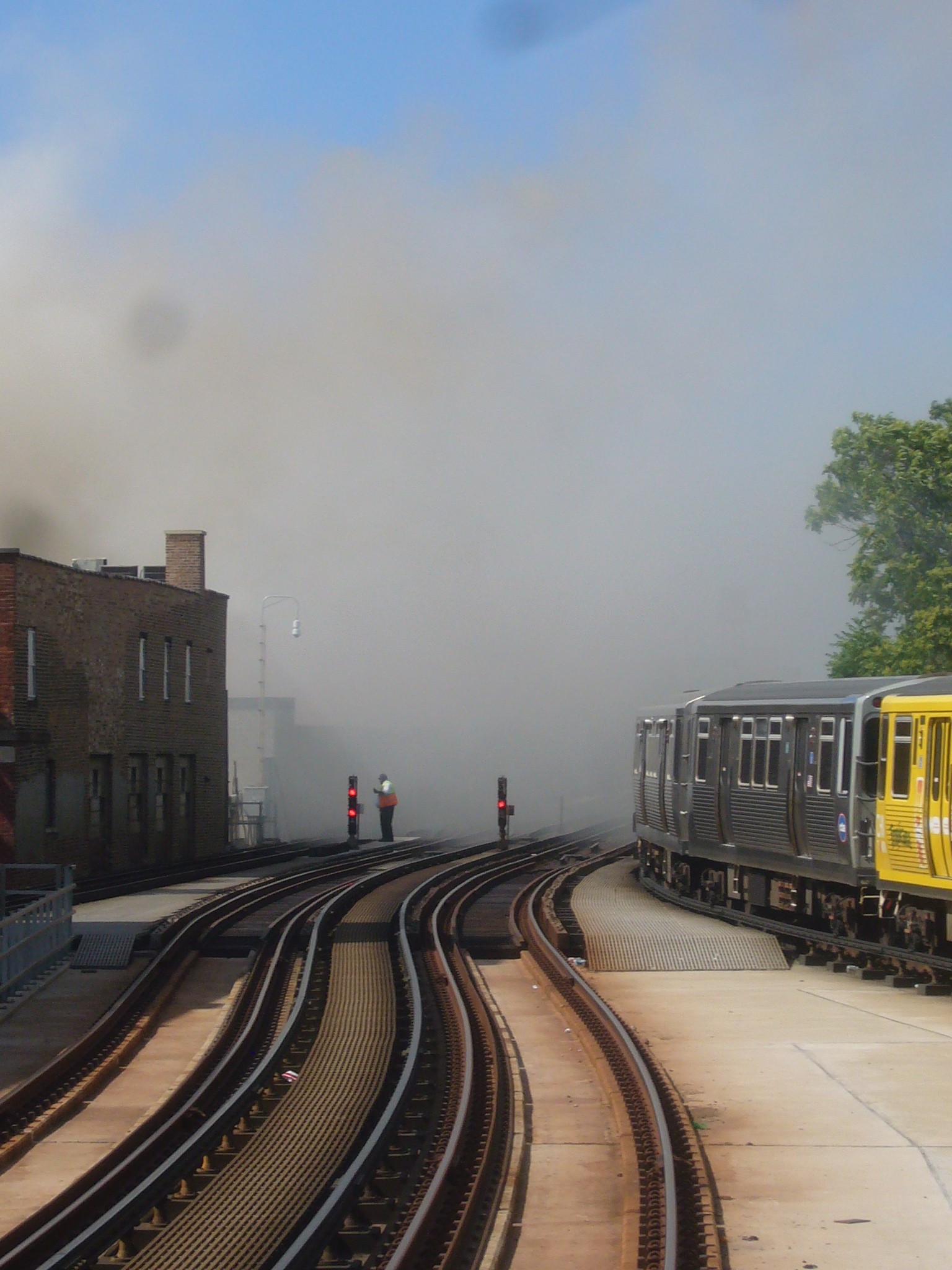
View north from Fullerton

It’s not just CTA’s suboptimal management that causes passengers to be delayed.  Fire yesterday just west of the Red Line near Altgeld, trains blocked for something like three hours.  The train on Track 4 pulled back to Fullerton shortly after this photo.

After about twenty minutes it was clear service wouldn’t resume soon.  A bus shuttle was promised, but downstairs there was just one empty bus labeled “not in service.”  Even if buses were available, closure of Sheffield meant traffic was even more of a mess than usual.

So, a nice walk to Belmont, I do wonder how the CA there would have responded to a demand for free admission but as it happened I had a valid transfer and no CA was in sight anyway, just a lot of folks waiting for that mythical bus.

Can’t really blame CTA for this one, doubtless there’s plenty of blame for other agencies but I’m not privy to the details.
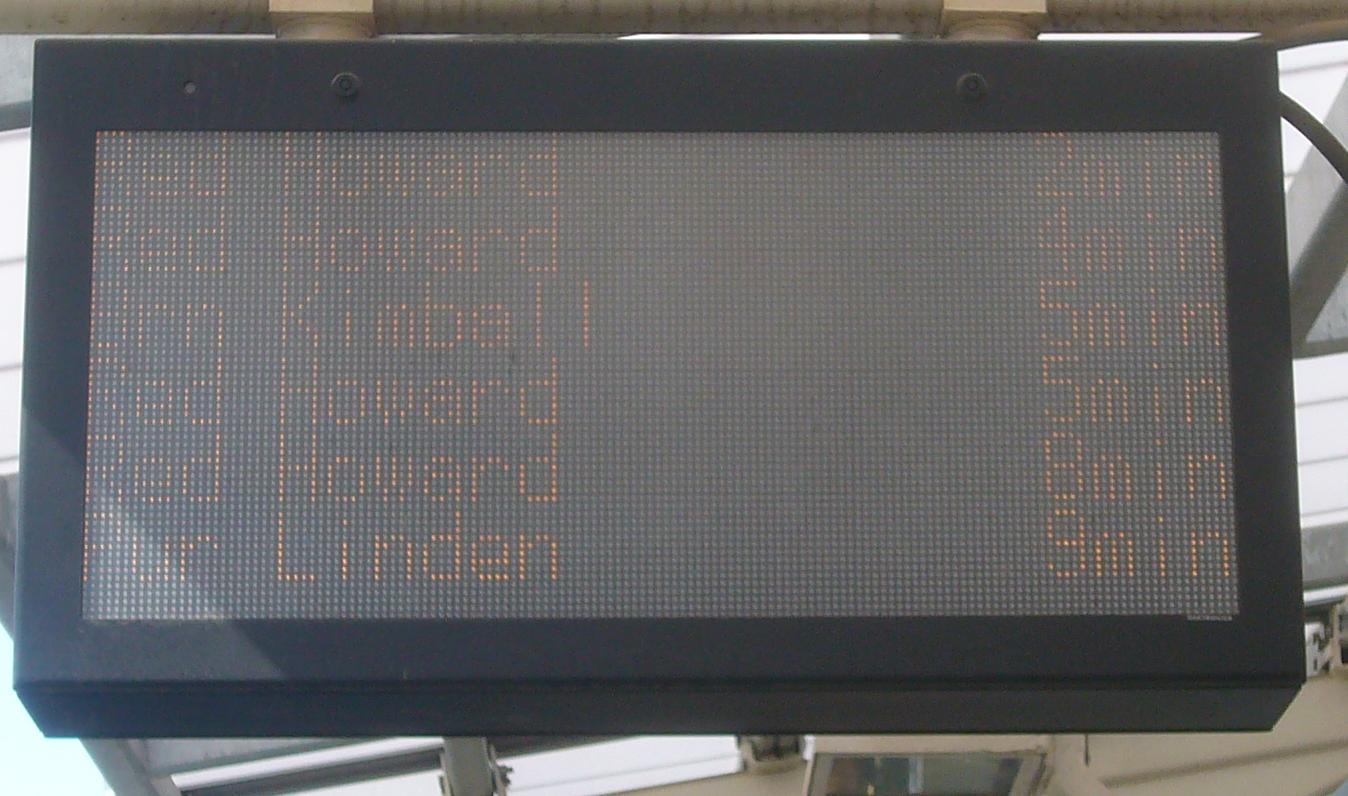
A three-hour delay didn't prevent the "information" display from promising six trains coming thru Fullerton in nine minutes.

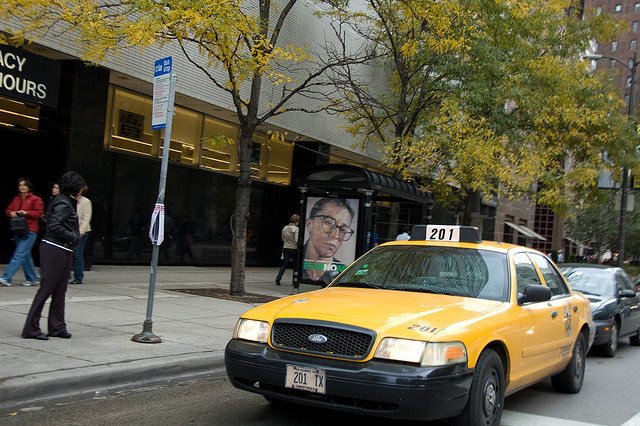
Why do cab medallions go up?

image:Mister-E via flickr (cc)
image credit:Mister-E via flickr (cc)

Last time we looked, Chicago taxi medallions were going for slightly over $250,000, far higher than a few years earlier.  In the subsequent 17 months, they’ve continued their rise, and here are the most recent transactions reported on the City’s web site:

4/27/12    6601    $325,000
4/27/12    5594    $345,000
4/30/12    6182    $348,000
5/3/12      1839     $360,000
5/4/12      2297     $370,000

Now, I do not follow taxi matters in great detail, as I am not of the economic class which can regularly use cabs.  But it’s hard to believe that, in less than two years, the economic value of the privilege of operating a taxi has increased by anything like 50%.

The best explanation, I think, came from a driver who styles himself Samuel Langhorne Insull.  He explained that medallions aren’t used by taxi passengers, but by taxi drivers.  And who are the taxi drivers?  For the most part, they’re people unable to get work in their chosen or more lucrative professions, who drive a cab for survival.  And are there more of those people nowadays, or fewer?

That makes sense as the main cause.  Of course, additional pressures are the general levitation of financial asset prices due to the FRB’s zero-interest-rate policy, and perhaps anticipation of future increases in value.

Planned office tower may take double subsidy

rendering of 444 W Lake St proposal
rendering from Chicago Sun-Times

Two or three developers (depending on which source you read) plan a new 45-story, 900K sq ft, $300 million office tower at 444 W Lake Street. In the world most of us were born into, this would mean they’d purchase the site, continue to pay taxes on it, and on the building when constructed. Thus the prior landowner would benefit from the transit and other infrastructure that we all provide, some part of this cost being offset by taxes resulting from the project.

This particular building, tho, may be a special case, to be built on air rights over the north approach to Union Station, tracks owned by either Metra or Amtrak. So public transportation would benefit, right?  It doesn’t appear so, because, I think pre-Amtrak, the old Chicago Union Station Co. sold off the air rights. The Sun-Times says Larry Levy owns the “site,” presumably including the air rights.

Still, the building will yield taxes which help the comunity pay, right? Not in today’s Chicago.  Blair Kamin says we’ll pay $29 million in real estate tax money to the developer, to build a park.  A commenter elsewhere suggests it might be $40 million. Whichever, of course, that’s on top of all the subsidies we pay to provide transit service and maintain infrastructure without which this building would be infeasible.

The Tribune helpfully notes that the project “is expected to generate … 3,400 permanent office jobs.”  Apparently those office jobs will be created to fill the building and would not otherwise exist in Chicago. The details of this mechanism are beyond me.

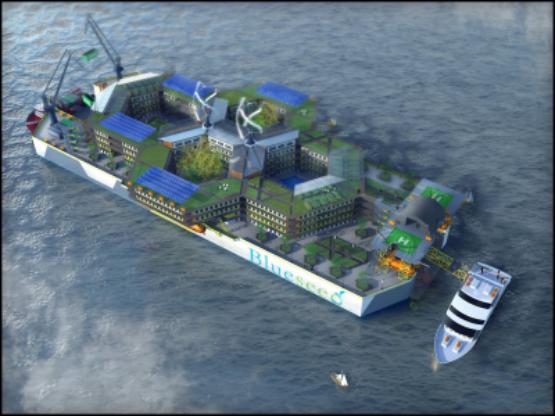
Silicon Ocean


Blueseed concept proposal
Blueseed concept proposal, one of several at their site

Blueseed plans to start operation next year of a floating city, safely outside the twelve-mile limit of U S jurisdiction, where a thousand innovators can work pretty much without the immigration hassles imposed on domestic companies.  The “land” of the ocean is of course free to anyone who wants to use it, but there are big expenses in building and operating the platform.  Still, they estimate living costs comparable to those of pricey San Francisco (albeit for much smaller living space.)  If land in Silicon Valley was cheap, the ocean site would seem expensive, but it isn’t, so it doesn’t.

They’re entirely legal, or so it appears, and don’t seem to avoid Federal income tax altho California taxes might not apply.  Blueseed  “will work closely with the U.S. Customs and Borders Protection towards an agreement that follows all applicable US laws and regulations,” and it appears access will be from the California mainland so everyone not a legal U S resident will need some kind of U S visa.

But being outside U. S. territory, flying a flag of convenience, what defense has Blueseed against whoever might want to attack them? Not to worry, “pirates … don’t exist near California…” and presumably attacks by government authorities are no more likely at sea than within the country.


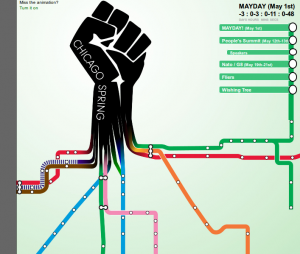
Almost the best use of CTA rail map for political purposes

from Chicago Spring

Cute automation at the Chicago Spring site. Best thing: your visit restores the East 63rd Street ‘L’.  Second best thing: Click on a link, it takes you around the map to a destination.  Less good thing: the destination seems to have nothing to do with the subject treated.  Still, it’s a cool presentation.

Somebody somewhere can do something equally original, and even more functional, for the Henry George School.